
Source-reviewed homeowner guide
A Massachusetts Homeowner’s Seasonal Lawn-Maintenance Guide
Worcester County lawns move through wet spring soils, active cool-season growth, summer stress, fall recovery, and winter dormancy. A useful plan responds to conditions instead of forcing the same task on every date.
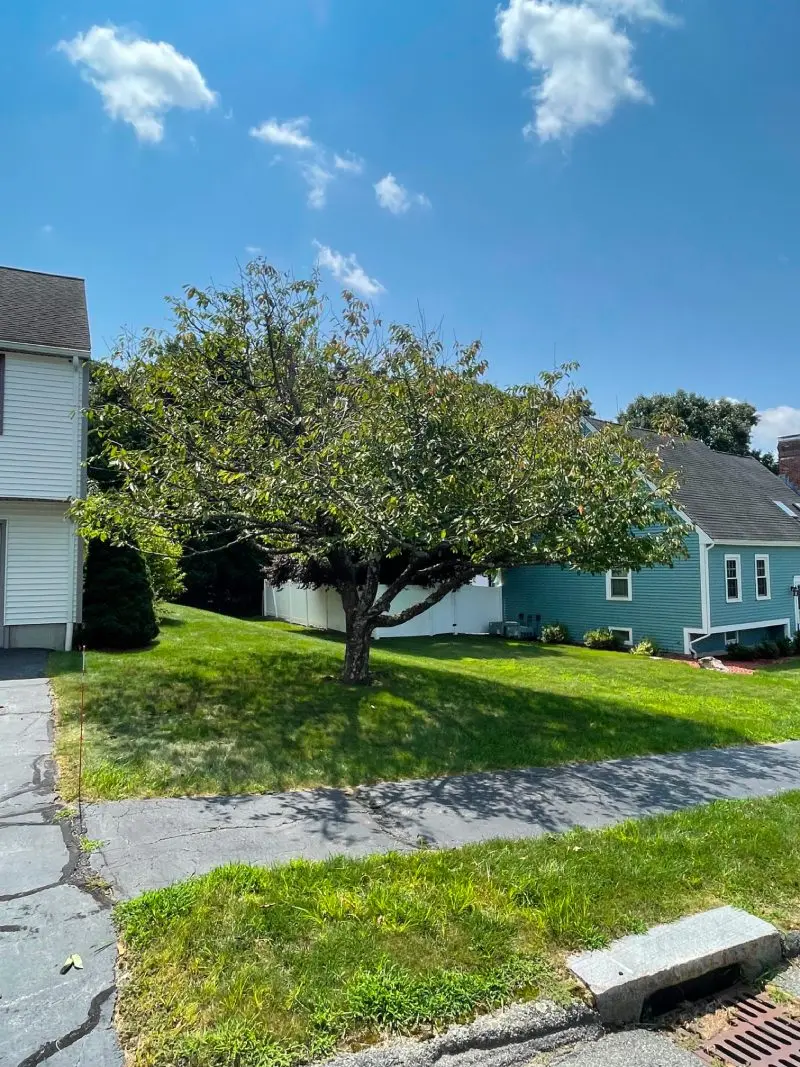
This article replaces the previous version at the same URL. Claims about certified or OSHA-trained crews, laser striping, blade-sharpening intervals, battery equipment, GPS route optimization, organic programs, sustainability results, and business-specific statistics were removed because supporting documentation was not supplied.
Spring: wait for workable ground
Early warmth can arrive before the soil is firm enough for intensive work. Walking heavy routes or using equipment on saturated turf can leave ruts and compacted areas. Start by clearing loose winter debris, checking drainage trouble spots, and identifying plow or salt damage. Schedule repair, edging, bed cleanup, and mowing when conditions allow the work without creating a new problem.
Spring is also a useful time to define what recurring maintenance should cover: turf areas, trimming obstacles, hard-surface cleanup, clipping handling, gates, pets, irrigation heads, and access. A written scope is more useful than assuming every “lawn service” includes the same tasks.
Mowing: use growth and grass condition as the guide
UMass Extension’s homeowner mowing guidance says that a 2- to 3-inch cutting height is best for most lawns and recommends removing no more than one-third of the existing shoot growth at one mowing. Other UMass guidance for southern New England notes that 3 to 3.5 inches is a useful rule of thumb for many lawn settings. Species, use, terrain, irrigation, heat, and appearance expectations all affect the right setting for a particular property.
The practical takeaway is not one universal number. Avoid routinely scalping turf, reduce an overgrown lawn gradually, keep mower blades in good cutting condition, and adjust frequency to actual growth. Clippings generally do not need to be bagged when they are short enough to filter back into the turf; excessive clumps may need to be dispersed or removed.
Summer: reduce unnecessary stress
Heat, uneven rainfall, thin soil, slopes, and reflected heat from paved areas can change how quickly different parts of a lawn dry. During hot, dry periods, higher mowing within the appropriate range helps preserve more leaf area. Do not keep mowing simply because a calendar says it is time if growth has slowed and the written service arrangement allows an adjustment.
Diagnose before treating. Brown or thin turf can have several causes, including drought stress, compaction, poor soil, insects, disease, irrigation problems, pet activity, or mowing damage. Regulated applications and technical diagnosis should be handled only by people who are qualified and authorized for that work.
Late summer and fall: plan recovery and cleanup
UMass Extension identifies late summer and early fall as the preferred period for many turfgrass establishment and overseeding projects because warm soils can support germination while cooler air reduces stress. The specific window is short and depends on grass type, site preparation, moisture, and enough time for establishment before winter.
Fall cleanup should be scoped before the heaviest leaf drop when timing matters. Identify wooded edges, bed areas, slopes, fenced sections, parking, disposal, and whether the property needs one visit or several. Leaves left in heavy mats can block light and hold moisture against turf; a clear collection and disposal plan prevents ambiguity.
Winter: document access before the storm
Before snow, mark vulnerable edges and confirm parking, gates, walkways, slopes, snow-storage areas, drainage paths, and surfaces that may need a different treatment. A winter agreement should define the exact areas, trigger, timing expectations, materials, and exclusions. No website can promise identical conditions through every Massachusetts storm.
A simple seasonal checklist
- Spring: wait for firm ground, clear debris, inspect damage, and define the maintenance scope.
- Growing season: mow for actual growth and conditions, not a rigid visual shortcut.
- Summer: avoid unnecessary low cutting and investigate problems before treating them.
- Late summer and fall: plan seeding early, manage leaf volume, and agree on disposal.
- Winter: document access, storage, triggers, materials, and property-specific risks.
Sources and review notes
The lawn-care guidance above was checked against the following primary University of Massachusetts Amherst Extension resources. They should be consulted directly for the full technical context:
- UMass Extension: Lawn Mowing
- UMass Extension: Best Management Practices—Mowing
- UMass Extension: Lawn Renovation & Overseeding
- UMass Extension: Southern New England mowing-height notes
Need property-specific service?
Describe the lawn, timing, and areas involved.
Thoren can review current route fit and whether the property needs an on-site look before a scope is prepared.